Taste of the sea
The richness of the bays of Galicia offers products recognized worldwide for its intense flavor and nutritional value.
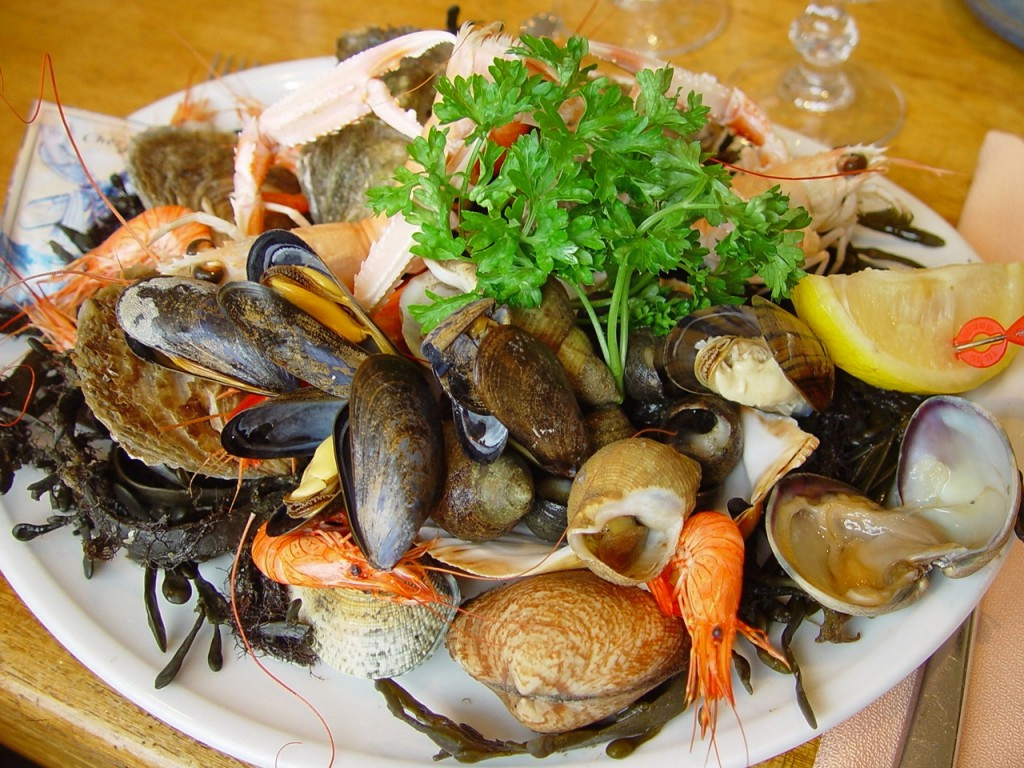
Parrillada de marisco
The bays of Galicia are one of the richest ecosystems in the world. This wealth is thanks to the marine currents in the bays, whose waters are periodically refreshed. The result: products recognised worldwide for their intense flavour and nutritional value.
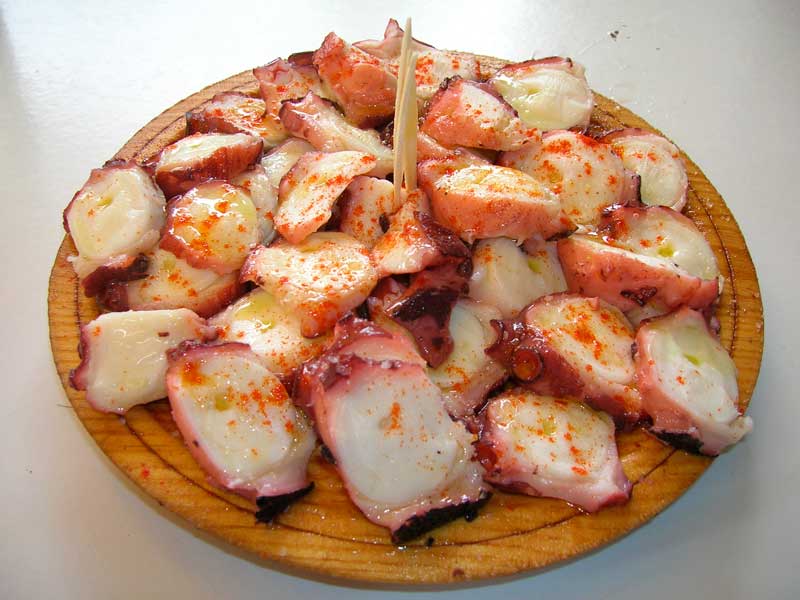
Pulpo a la gallega
Here, at the edge of the sea, is the ideal place to sit down in any of the bars and enjoy these flavours of the sea, from simple and delicious squid to more elaborate recipes with fish landed on this very harbour by the boats that you can see coming and going from the fishing dock.
LIFE IN THE SAND
In Muros you can participate in activities related to the profession of shellfish-gatherer on the sands, or in the fish and shellfish auction in the dock fish market, by contacting the “Cofradia de Pescadores” (Fishermen’s Brotherhood).
It’s a good way of getting close to the natural cycles, the marine environment and the responsible consumption of fishing produce: a responsible consumer participates in respecting and conserving the marine environment, and promotes sustainable fishing.
The Bay of Muros and Noia is the one most exposed to the Atlantic storms as it lacks protective islands. Nevertheless, there are plenty of coves and sheltered places where various bivalves are found, especially the cockle and the carpetshell clam. Some comments:
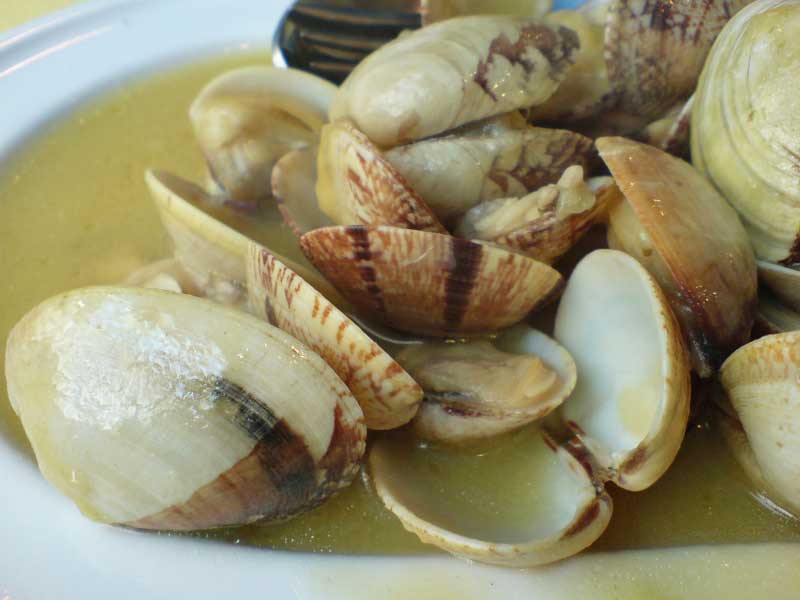
Clam
The grooved carpetshell is highly valued for its intense flavour and ease of eating. It has a wonderful taste, whether eaten natural or grilled. Both the grooved and the common carpetshell are harvested in the traditional way, on foot with a hoe. Harvesting is prohibited in March, April and May. The best seasons are July-August and November-December.
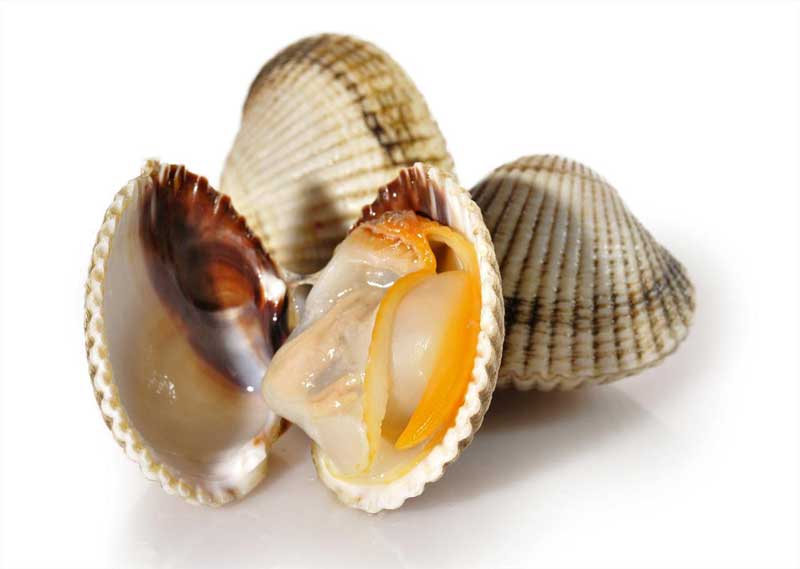
Cockle
The cockle is a species highly prized for its flavour, harvested traditionally, with a rake or on foot with a hoe.
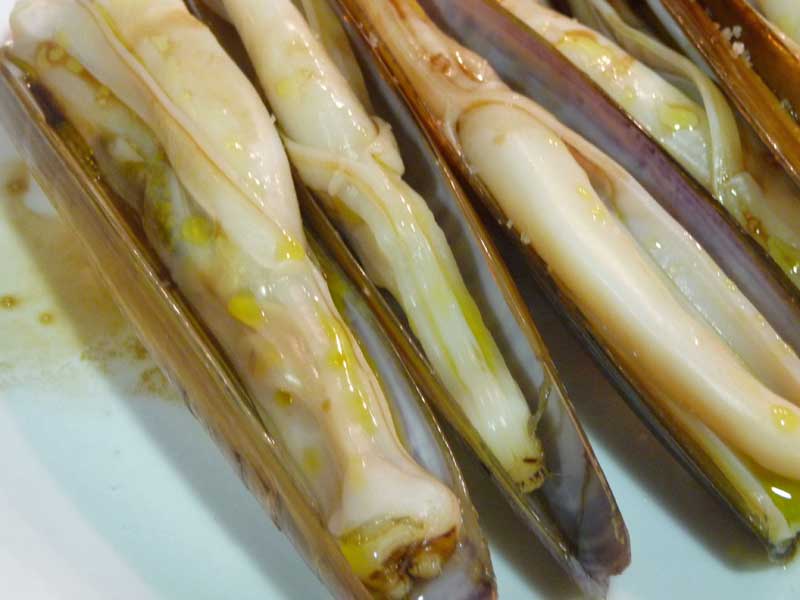
Razor clam
Razor clams live buried in the bays’ sand, always in clean shallow water. They are taken one at a time by hand by breath-holding or snorkelling divers. Their exploitation is controlled according to location.
CULTIVATING THE SEA
Rom the platforms hang umbilical cords which give life to various species of molluscs. This greatly increases their reproduction.
The great wealth of the waters and the beneficial environmental conditions in the Galician bays boost the growth rate and the quality of the mussel. Galician mussels are grown and harvested from floating platforms in sheltered parts of the bays of Vigo, Pontevedra, Arousa, Muros-Noia and Ares-Betanzos.
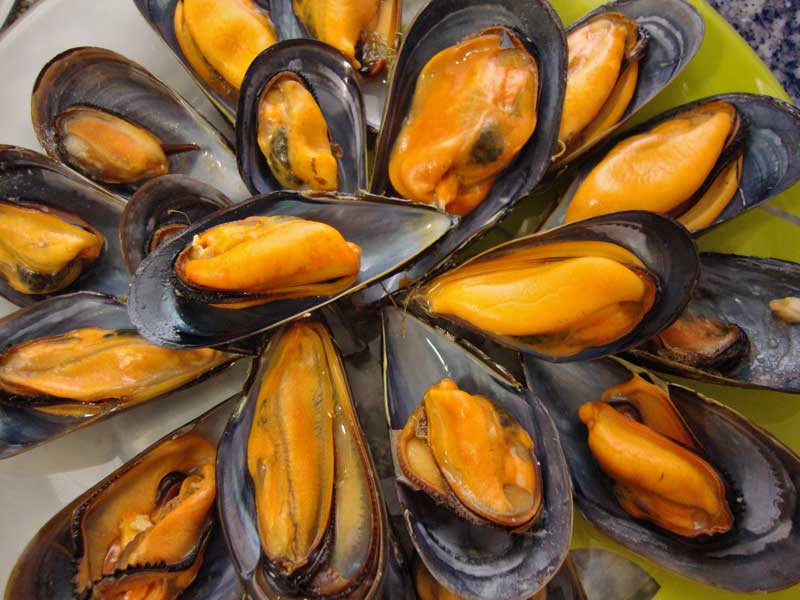
Mussels
En nuestra Ría de Muros e Noia hai unas 118 bateas repartidas en tres polígonos.
In our bay there are around 118 mussel platforms in three different groups. The harvesting season for mussels depends, among other things, on their destination. If they are to be canned or processed, they are usually harvested in the summer. Those intended for direct consumption are best collected during the autumn and winter. The Galician mussel reaches commercial size (70-95 mm) in approximately 17 months, while in other producing countries growth is much slower: mussels in the rest of Europe need 2 to 6 times as long to reach this size.
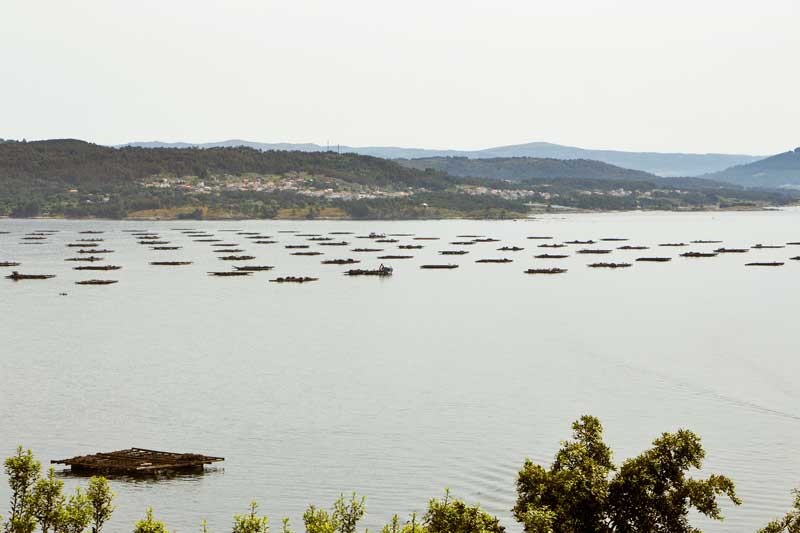
Floating platform
The traditional mollusc-farming system in Galicia is the platform or “batea”, a native design which gives the highest known productivity and has made Galicia the European leader. The batea is a floating nursery consisting of floats and a eucalyptus lattice of roughly rectangular shape, from which mussel ropes hang.
As well as mussels, scallops and oysters are grown on the bateas. Galicia produces annually two types of oyster: flat or European, and Pacific, a species registered by Galician producers under the name “curly oyster”. The season for wild oysters comprises the months of December, January and February; farmed oysters are available all year.
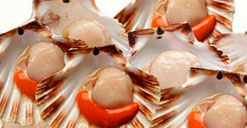
Scallop
The scallop is Galicia’s most characteristic shellfish, not only for its high culinary value but also because of its relationship with the Way of St James: it is the pilgrims’ symbol, accompanying them along the route until their arrival at the Apostle’s Tomb. The farmed scallop presents an extra challenge: since they don’t naturally attach themselves to the ropes like oysters or mussels, each one must be tied on manually. Wild scallops which live on the sea floor are taken from launches with a special rig called a rake or harrow.
SKIMMING THE SEA
There are a great many different species of crustaceans, which colonise a wide range of habitats. They dominate the seas, as insects dominate the land
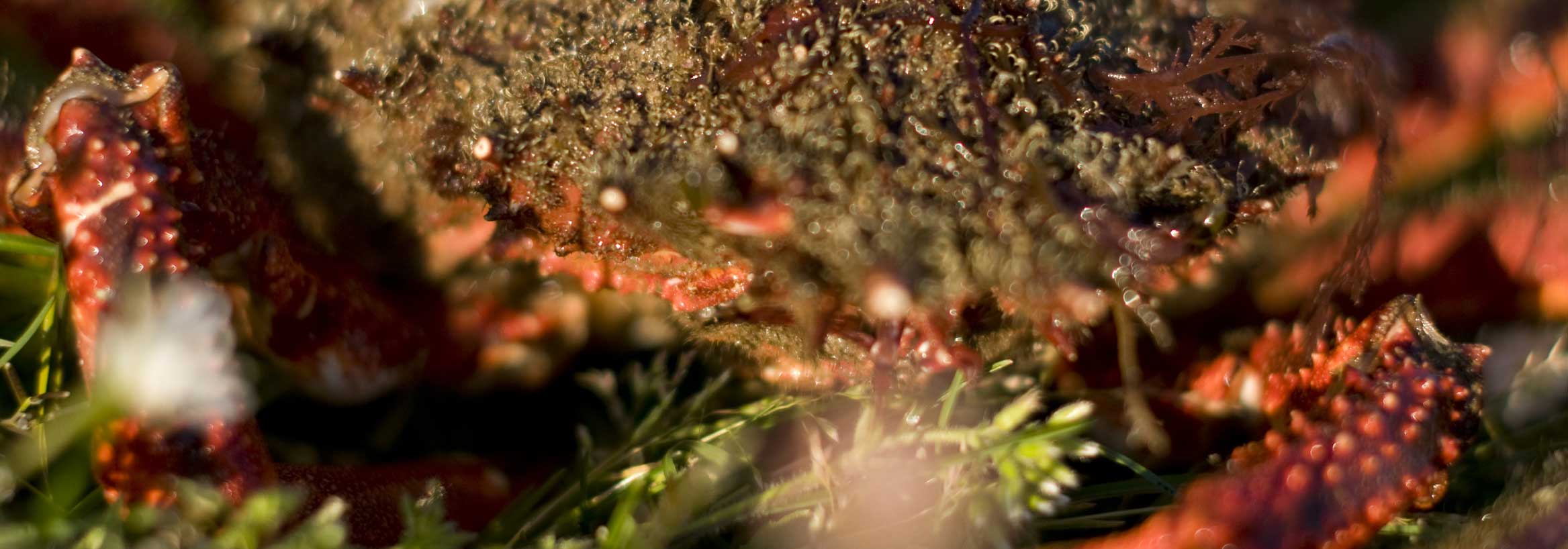
Spider Crab
The Spider Crab is captured in the traditional way with traps and nets. Taking them is banned from the end of June to the end of October. Their habitat is mainly the bays where the sea-floor is sandy, as is the case of the Bay of Muros, and where it is rocky, as throughout the “Death Coast” — two of the most productive areas.
For many people the Spider Crab is one of the most highly valued seafoods because of its unmistakeable taste. In fact it has three distinct flavours, according to which part of the body you are sampling: legs, breast or head, each tastier than the others. Distinguishing the Galician Spider Crab from the French is its darker, more intense colouring and its hairy shell with encrusted algae; also its legs are larger.
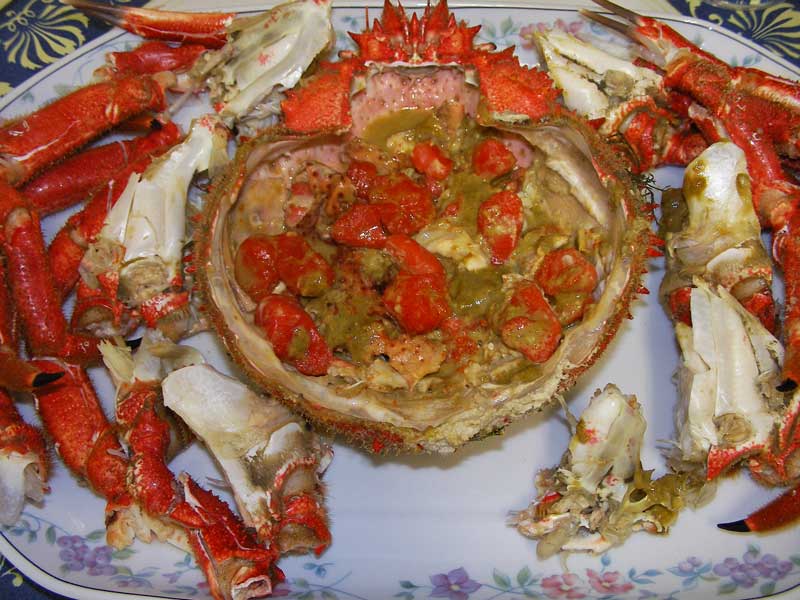
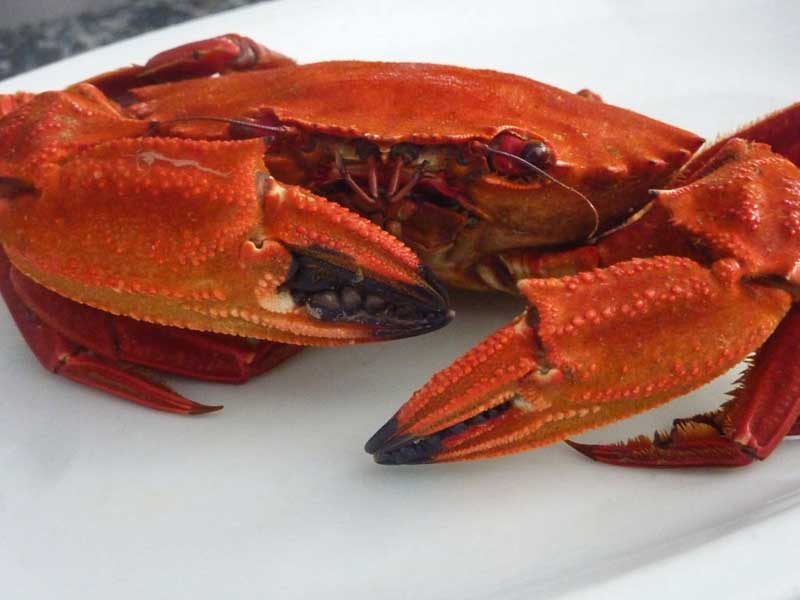
Velvet Crab
The Velvet Crab is a decapod, in the Crab family. Its shell is grey-brown and has a covering of short hair like velvet. Its claws, larger in males, have dark lines towards the points. It features on the table in seaside towns, whose inhabitants particularly relish its flavour.